


GLOBAL BRANDS LOOKING FOR UNIFIED FULFILMENT



Edition 013 | August 2026
You're reading IF/Then by IFGlobal, the monthly newsletter for brands who don't compromise. For every what if, there's a then. If you're building your brand, then we're building with you. If you want scale, then you need strategy. If you're ready to grow, then this is where it starts.
IF you're waiting until October to prepare for peak, Then you're already behind
For many ecommerce brands, the busiest trading period of the year accounts for a significant proportion of annual revenue. During November and December 2025, UK shoppers spent £26.9 billion online, signalling the highest online spending Christmas period on record. According to the National Retail Federation, nearly half (45%) of holiday shoppers browse and buy items before November, meaning brands have less time than ever to get ready.
By October, successful brands aren't finalising their plans. They're executing them.
-
Inventory should already be on order.
-
Warehouse capacity should be booked.
-
Forecasts should be refined.
-
Technology should be tested.
-
Customer communications should be planned.
The brands that enjoy a smooth, profitable Q4 aren't the ones reacting quickly. They're the ones who prepared early enough that they very rarely need to be in reactive mode.
What you should be doing now
1. Pressure-test your demand forecast
No forecast is perfect, but relying solely on last year's sales can leave you exposed.
Customer behaviour changes. Product ranges evolve. Marketing budgets increase or decrease. New competitors enter the market.
Now is the time to revisit your forecasts using current sales trends, promotional calendars and supplier lead times to give yourself and your fulfilment partner the best chance of success.
Ask yourself:
-
Which SKUs are likely to experience the biggest uplift?
-
What happens if demand exceeds expectations?
-
Where could you safely reduce stock without risking availability?
A more accurate forecast can help reduce unnecessary storage costs and protect cash flow.
2. Make sure inventory will arrive on time
One of the biggest causes of peak disruption isn't selling out. It's stock arriving too late.
Production delays, port congestion, customs clearance and carrier capacity all become more challenging as Q4 approaches. Once September arrives, shipping options become more limited and considerably more expensive.
You should already know:
-
When manufacturing will finish
-
When goods will leave origin
-
How they'll be transported
-
When they'll arrive at the warehouse
-
What contingency plans exist if anything slips
Visibility across inbound logistics allows businesses to make informed decisions before delays become customer problems.
3. Review your fulfilment capacity
Customers have become accustomed to fast, reliable delivery. Research shows that delivery speed remains one of the biggest factors influencing purchase decisions and customer satisfaction.
Now is the time to review:
-
Expected daily order volumes
-
Staffing requirements
-
Warehouse receiving schedules
-
Cut-off times
-
Packaging requirements
-
Carrier capacity
If your fulfilment partner doesn't know what your peak forecast looks like, now is the time to tell them.
4. Test your systems before customers do
Peak exposes weaknesses that can go unnoticed during quieter periods.
-
Inventory integrations
-
Marketplace connections
-
Courier rules
-
Returns processes
-
Reporting
-
Promotional codes
Rather than hoping everything works, brands should test every critical workflow now. A failed integration during Black Friday is far more expensive than discovering an issue in September.
5. Prepare your returns strategy
Peak isn't over when the last order ships. January is one of the busiest months operationally as returns begin arriving.
Having clear returns processes, automated workflows and accurate inventory visibility allows returned products to be processed faster and made available for resale sooner.
Planning for returns before peak is just as important as planning outbound fulfilment.
Why operational visibility matters more during peak
During quieter periods, businesses often have time to manually resolve issues. During peak, you don't.
A delayed inbound shipment can affect inventory availability. A stock discrepancy can lead to overselling. A courier issue can create hundreds of customer enquiries. The sooner these issues are identified, the easier they are to resolve.
That's why visibility across inventory, fulfilment and inbound logistics becomes one of the biggest competitive advantages during Q4.
At IFGlobal, our proprietary BladePRO fulfilment operating system gives brands real-time visibility across inventory, orders, warehouse operations, and returns, while our supply chain support team can provide oversight of freight and inbound shipments before stock even reaches our fulfilment centres.
Instead of reacting once problems reach the warehouse, brands can identify potential issues much earlier and make informed decisions before customers are affected.
"You don’t need to be perfect going into peak, but you do need to be aligned – across your business and with your partners. When ops, tech, and customer experience are working together as one team, everything runs smoother. That really makes a difference when the pressure’s on." - Paul Lavin, Operations and Transformation Director at IFGlobal.
There's still time to prepare, but that window is closing
Over the coming weeks, we're helping our clients:
-
Review demand forecasts and inventory planning
-
Coordinate inbound freight and supplier timelines
-
Improve inventory visibility across channels
-
Prepare warehouses for increased order volumes
-
Optimise fulfilment and returns processes
-
Build contingency plans for potential disruption
We’re built to support ecommerce growth, whether you're scaling fast or stabilising operations. From inventory prep and tech integration to returns management and analytics, our team is here to help you close the gaps and thrive in Q4 (and beyond).
Book a discovery call with one of our fulfilment experts to see how better fulfilment can unlock your next stage of growth.
EU packaging changes: What you need to know

The EU Packaging and Packaging Waste Regulation (PPWR) came into force on 12th August 2026, introducing phased requirements to reduce packaging waste, improve recyclability and standardise packaging rules across the EU.
Businesses selling products into and within the EU will see new requirements introduced around:
-
Reducing unnecessary packaging and, over time, limiting excess empty space in certain packaging formats
-
Improving recyclability and the use of recyclable materials
-
Increasing the use of recycled content in certain packaging formats
-
Introducing more consistent requirements for packaging design, labelling and waste management across EU markets
While some obligations came into force this month, many requirements will be introduced in phases, with different implementation dates depending on the specific measure.
Read our article to understand what’s changing and how we're preparing.
When did you last review your freight arrangements?
The logistics setup that worked two years ago may not be the right one today.
Suppliers change. Shipping routes change. Carrier performance changes. Costs change.
That's why we're offering a free freight and supply chain review to assess your inbound logistics and identify opportunities to improve efficiency, visibility and coordination, including:
-
A review of your current freight and supply chain arrangements
-
A benchmark of your existing provider against our integrated solution
-
Opportunities to improve communication and operational efficiency
-
Recommendations to simplify your inbound supply chain and reduce unnecessary complexity
No obligation, just practical advice tailored to your business.
More from IFGlobal
.png?width=1200&height=627&name=Jane%20Derbyshire%20Spotlight%20(2).png)
IFGlobal in focus: Jane Derbyshire. In this edition, we speak with Jane Derbyshire, our Sales and Commercial Director. Highly collaborative, commercially driven, and deeply invested in client success, Jane brings a clear vision for how IFGlobal can help brands navigate complexity and unlock growth.

How value-added fulfilment services help ecommerce brands scale faster. In this article, we go beyond traditional pick, pack and dispatch to explore how growth-focused fulfilment has become a strategic advantage for ecommerce brands. Discover why services such as kitting, bundling, postponement and reworks have evolved from warehouse activities into essential capabilities that help brands launch products faster, reduce inventory risk and create the operational agility needed to scale.
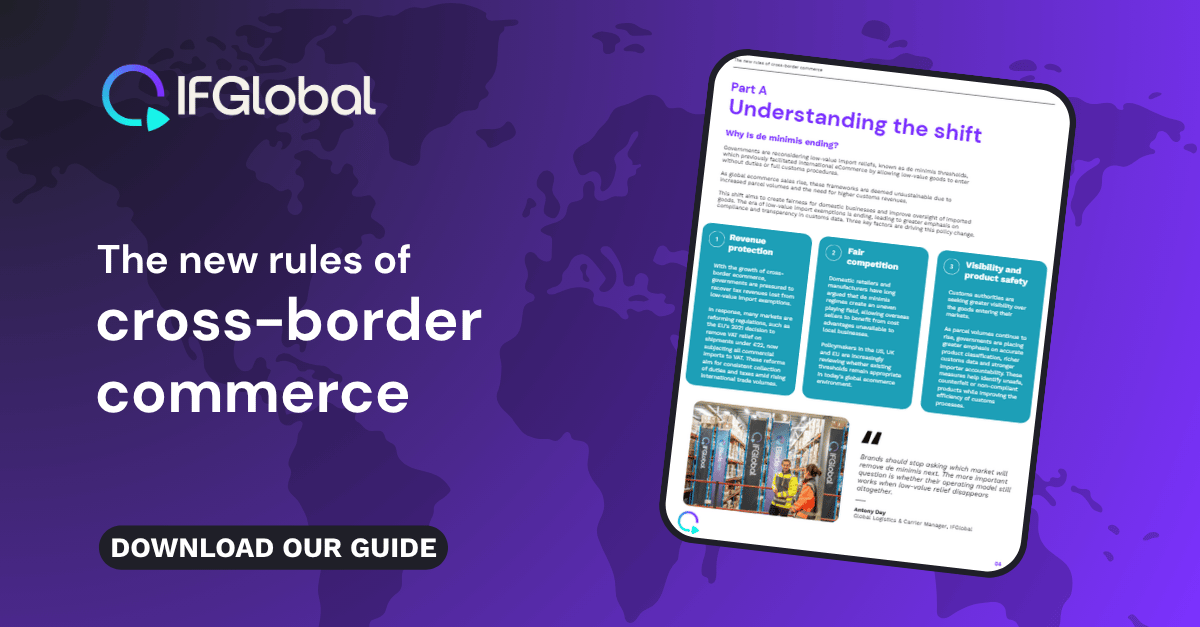
Why the old cross-border ecommerce model no longer works and what you should do next. As governments tighten customs regulations and remove low-value import exemptions, successful cross-border ecommerce is about building an international operating model that protects margins, ensures compliance and delivers a seamless customer experience in every market.