


GLOBAL BRANDS LOOKING FOR UNIFIED FULFILMENT



If you sell products into or within the EU, the way you package, label and ship your orders is changing.
The EU Packaging and Packaging Waste Regulation (PPWR) introduces new rules designed to reduce packaging waste, improve recyclability and create a consistent framework across all EU Member States. While many of the requirements are phased in over the coming years, businesses should start preparing now.
For ecommerce businesses selling into or within the EU, the regulation introduces new requirements that will affect how packaging is designed, labelled and managed over the coming years. While many of the obligations won't apply immediately, the direction of travel is clear: packaging is expected to become more sustainable, more recyclable and easier to manage across every EU Member State.
For businesses already selling in Europe, or those planning to expand into EU markets, understanding the PPWR now will make it easier to prepare for future requirements to avoid unnecessary disruption and build compliance into long-term packaging strategies.
In this article
What is the PPWR?
The Packaging and Packaging Waste Regulation (PPWR) replaces the previous Packaging and Packaging Waste Directive with a single regulation that applies consistently across all EU Member States.
Unlike a directive, which each country implements through its own national legislation, a regulation applies directly across the EU. The intention is to create a more consistent approach to packaging requirements while reducing unnecessary packaging, increasing recycling rates and making it easier for businesses to operate across multiple European markets.
The regulation forms part of the EU's wider Circular Economy Action Plan and reflects growing pressure to reduce packaging waste and encourage the use of recyclable and recycled materials.
The PPWR introduces measures covering:
-
Packaging design and recyclability
-
Packaging reduction and waste prevention
-
Recycled content requirements for certain plastic packaging
-
Harmonised labelling requirements
-
Producer responsibilities
-
Restrictions on unnecessary or excessive packaging
These changes won't require an overnight transformation, but they are likely to influence future packaging specifications, supplier decisions and fulfilment operations, making it worthwhile to start reviewing current packaging strategies now.
When does it apply?
The PPWR officially entered into force in February 2025. However, most of its practical requirements begin applying from Wednesday 12th August 2026, with additional obligations being introduced in stages over the following years. Some requirements will not take effect until 2028 and beyond.
This phased implementation gives businesses time to review their packaging, supply chains and compliance processes before new requirements become mandatory. It also recognises that many areas of the regulation require further technical guidance before they can be consistently applied across Europe.
As with many new regulations, additional implementing acts and clarification are expected over the coming years. Businesses should therefore treat the PPWR as an evolving framework rather than a single compliance deadline.
| Date | Event |
| February 2025 | PPWR entered into force |
| 12th August 2026 | Most provisions begin applying |
| 2028 onwards | Various delegated acts and technical requirements |
| 2030 | Empty space requirements (subject to implementing acts) |
| 2040 | Final recycled content targets |
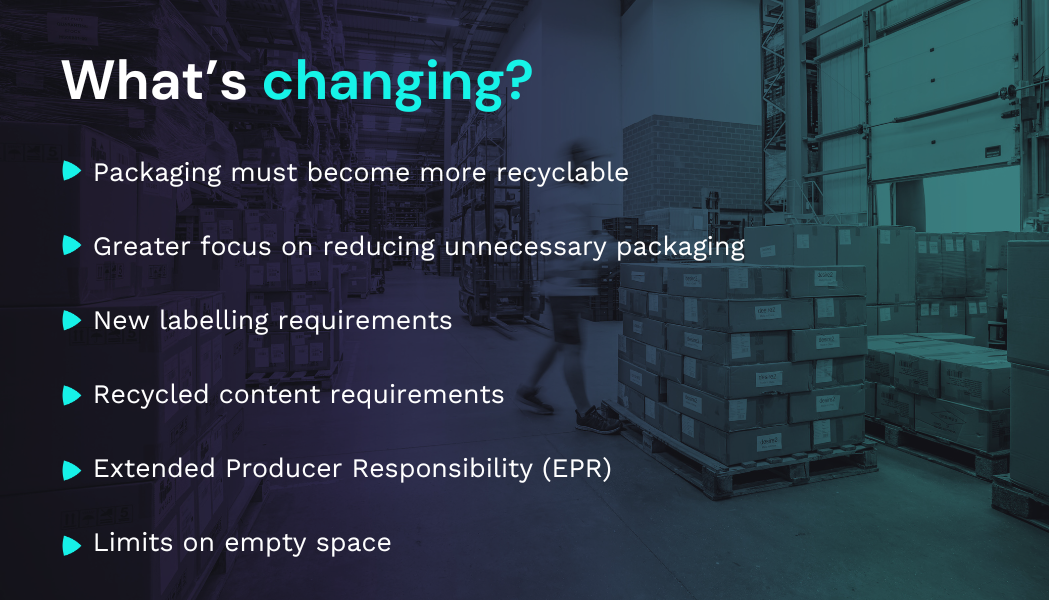
What is changing?
The PPWR introduces several significant changes designed to reduce packaging waste while improving consistency across the European market. Although not every requirement will affect every business, there are several areas that ecommerce brands should begin paying close attention to.
-
Packaging must become more recyclable
Packaging placed on the EU market will need to meet design-for-recycling requirements.
The aim is to ensure packaging can be effectively collected, sorted and recycled through existing waste systems. Over time, packaging that cannot be recycled to the required standard may no longer be permitted on the EU market.
Brands must begin reviewing packaging materials, mixed-material designs and components that could make recycling more difficult.
-
Greater focus on reducing unnecessary packaging
The PPWR places greater emphasis on using only the packaging that's needed to protect products during transport.
Businesses will be expected to minimise unnecessary packaging components and reduce excessive void fill to ensure packaging is proportionate to the product being shipped. As well as reducing waste, this can improve transport efficiency and help lower shipping costs by making better use of available space.
-
New labelling requirements
The regulation introduces harmonised labelling rules to make it easier for consumers to understand how packaging should be sorted and recycled.
Over time, more consistent labels across EU Member States should reduce confusion and improve recycling rates, particularly for businesses selling into multiple European countries.
-
Recycled content requirements
Certain plastic packaging will be required to contain minimum levels of recycled material as future implementation dates are reached.
These requirements are intended to stimulate demand for recycled plastics and reduce reliance on virgin materials, helping to support the EU's wider sustainability objectives.
-
Extended Producer Responsibility (EPR)
Many businesses already have obligations under Extended Producer Responsibility (EPR) schemes across Europe.
The PPWR doesn't replace these schemes but works alongside them while introducing greater consistency across Member States. Businesses should continue to understand their obligations in each market where they place packaged goods onto the market.
-
Limits on empty space in ecommerce packaging
Looking further ahead, the PPWR introduces a new requirement aimed at reducing excessive packaging in ecommerce.
From 2030 (or three years after the relevant implementing acts enter into force, whichever is later), businesses filling grouped, transport and ecommerce packaging will need to ensure that the empty space ratio does not exceed 50%.
The European Commission is expected to publish the methodology for calculating this ratio before February 2028. While the detailed calculation is still to come, the objective is to reduce unnecessary air being shipped around Europe while still allowing sufficient protective packaging where it's needed to prevent products from being damaged in transit.
For ecommerce brands, this highlights the need select appropriately sized cartons, review packaging specifications and reduce excessive void-fill without compromising the customer experience.
Who could be affected?
Any business placing packaged goods onto the EU market should consider whether the regulation applies to them. In simple terms, 'placing packaging on the EU market' generally means making packaged goods available in the EU for the first time.
This includes:
-
Ecommerce retailers selling directly to EU consumers
-
UK businesses shipping orders into the EU
-
Manufacturers and brand owners
-
Importers and distributors
-
Businesses using third-party fulfilment providers
Even where fulfilment is outsourced, responsibility for packaging compliance often remains with the business placing products on the market.
For brands selling internationally, it's therefore important to understand not only the regulatory requirements but also how responsibilities are shared between the brand, packaging suppliers and fulfilment providers.
Having clear ownership of packaging specifications now will make future compliance significantly easier as additional PPWR requirements come into force.
Selling into the EU from the UK?
Although the UK is no longer an EU Member State, PPWR still applies to packaging placed on the EU market. If you ship orders to customers in the EU, the regulation may affect your business.
What should businesses do now?
Although many requirements will be phased in over the next few years, there are practical steps you can begin taking today to ensure you’re well prepared.
Review your packaging
Assess whether your current packaging is appropriately sized, designed with recyclability in mind, and free from unnecessary packaging components.
If your business uses multiple carton sizes, protective inserts or branded packaging, now is a good opportunity to understand how these may align with future requirements.
Speak with your packaging suppliers
Discuss how your packaging may need to evolve over the coming years.
Many packaging manufacturers are already developing solutions designed to meet future PPWR requirements, so early conversations can help avoid rushed changes closer to implementation deadlines.
Understand your responsibilities
Review how your products are placed on the EU market and ensure you understand which compliance obligations apply to your business.
Where responsibilities are shared between manufacturers, fulfilment providers and distributors, it's important that each party understands its role.
Keep up to date
The PPWR will continue to evolve as further technical guidance and implementing acts are published.
Monitoring developments now will allow businesses to make gradual, well-planned changes rather than reacting once new requirements become mandatory.
What does this mean for fulfilment?
For fulfilment operations, the PPWR reinforces the importance of using packaging that is not only fit for purpose but also supports sustainability, efficiency and regulatory compliance.
As the regulation is implemented, brands should expect greater scrutiny of how products are packaged before they leave the warehouse. This may influence areas such as:
- Carton right-sizing to minimise unnecessary empty space while ensuring products remain adequately protected.
- Packaging material selection, with greater emphasis on recyclable materials and designs that support future recycling requirements.
- Void-fill usage, ensuring protective materials are used appropriately without creating excessive packaging.
- Supplier management, with closer collaboration between brands, packaging manufacturers and fulfilment providers to ensure packaging specifications remain suitable as requirements evolve.
- Packaging data and record keeping, as businesses increasingly need to demonstrate how packaging meets regulatory obligations.
- Customer packaging experience, balancing sustainability with presentation, product protection and brand perception.
Where fulfilment providers supply packaging materials, they can play an important role in helping brands implement packaging solutions that align with evolving requirements.
Where brands specify or supply their own packaging, responsibility for ensuring those materials comply with applicable regulations generally remains with the business placing the products on the EU market.
At IFGlobal, we work closely with our clients to ensure our fulfilment operations support their packaging strategies without compromising product protection, operational efficiency or the customer experience.
While our clients remain responsible for the compliance of the packaging they specify or supply, we are committed to handling and packing products in a way that preserves the integrity of that packaging throughout the fulfilment process.
As packaging legislation continues to evolve, we'll continue reviewing our own processes, monitoring regulatory developments and sharing practical guidance to help our clients prepare with confidence.
The PPWR represents a long-term shift in how packaging is designed, used and managed across Europe.
While many requirements are still being phased in, businesses that review their packaging strategy early will be better placed to adapt without disruption.
At IFGlobal, we're continuing to monitor the regulation and work with our clients to ensure their fulfilment operations support evolving packaging requirements as further guidance becomes available.
Disclaimer:
This article does not constitute legal advice. The information is based on our current understanding and our operational experience as a fulfilment services provider. For binding legal assessments, we recommend consulting specialised legal advisers.
As the PPWR continues to be implemented and additional guidance is published by the European Union and individual Member States, the information in this article may become outdated.