


GLOBAL BRANDS LOOKING FOR UNIFIED FULFILMENT



Edition 012 | July 2026
You're reading IF/Then by IFGlobal, the monthly newsletter for brands who don't compromise. For every what if, there's a then. If you're building your brand, then we're building with you. If you want scale, then you need strategy. If you're ready to grow, then this is where it starts.
IF you're planning for peak, Then your supply chain deserves as much attention as your marketing
For most ecommerce brands, peak season planning begins with forecasts, promotions and marketing campaigns. Teams spend months building demand and planning launches, all with the aim of making the busiest trading period of the year as successful as possible.
But demand is only one side of the equation.
Behind every successful peak season is a supply chain capable of keeping pace with customer expectations. Products need to be manufactured on time, moved efficiently across international borders, received into the warehouse without delay, and fulfilled quickly once orders begin to increase.
When one part of that chain falls behind, the impact is rarely isolated. Delayed production can affect freight availability. Shipping delays can affect warehouse receiving schedules. Stock shortages can force changes to marketing activity. Small disruptions quickly become customer-facing problems. The brands that consistently perform well during peak are the ones reviewing their supply chain months in advance to identify potential pressure points while there is still time to act.
Key areas to review before peak hits
1. Inventory planning
Forecasting demand has become increasingly sophisticated, but forecasts are only useful if suppliers, manufacturers and logistics partners have the capacity to deliver against them.
Rather than relying solely on historical sales data, brands should be considering how current trading performance, promotional activity and supplier lead times align. It's equally important to understand where flexibility exists if demand exceeds expectations, or where additional stock may create unnecessary cost.
Peak planning is about ordering the right stock at the right time, with enough resilience built into the process to respond when circumstances change.
2. Freight capacity and lead times
International freight remains one of the least predictable parts of the ecommerce supply chain. Seasonal demand places additional pressure on carriers and customs processes, while global events can quickly affect capacity and transit times.
Waiting until production is complete before arranging freight often leaves brands with fewer options, higher costs and tighter delivery windows.
Instead, freight planning should begin alongside purchasing decisions. Securing capacity early, understanding alternative transport options and maintaining visibility throughout transit allows businesses to make informed decisions before delays begin affecting stock availability.
3. Supplier relationships
Supply chain resilience often starts long before products leave the factory.
As production schedules tighten, strong communication with suppliers becomes one of the biggest advantages a brand can have. Regular updates and realistic lead times allow businesses to adjust purchasing, freight and inventory plans before small issues become major operational challenges.
Brands that rely purely on purchase orders often find themselves reacting to problems, whereas brands that actively manage supplier relationships are far more likely to anticipate them.
During peak, a delay of just a day can be the difference between products arriving in time for a major campaign or missing the opportunity altogether.
4. Operational readiness
When businesses think about peak readiness, warehouse capacity is often the first consideration. While fulfilment performance is critical, operational readiness extends well beyond warehouse capacity. Inbound deliveries need to arrive in line with receiving schedules, inventory must remain visible across every sales channel, customer service teams need accurate information, and reporting should identify operational issues before customers do.
Peak is ultimately a test of operational coordination. Every part of the business relies on the next, making visibility and communication just as important as physical capacity.
5. End-to-end visibility
The biggest risk during peak isn't just disruption; it's noticing it too late.
Without visibility across suppliers and warehouse operations, businesses often make decisions using incomplete information. Marketing campaigns continue despite delayed stock. Customer expectations remain unchanged while delivery timelines shift behind the scenes.
Having a clear view of inventory throughout its journey enables businesses to communicate more effectively and protect customer experience when unexpected challenges arise.
As supply chains become increasingly global, visibility is becoming less of a competitive advantage and more of an operational necessity.
Why supply chain support matters before peak arrives
Modern ecommerce supply chains rarely rely on a single supplier or logistics provider. Most brands are coordinating manufacturers, freight forwarders, customs processes, warehouses and fulfilment partners across multiple countries, all while trying to maintain accurate inventory levels and meet growing customer expectations.
Managing those moving parts internally can become increasingly resource-intensive as businesses scale.
That's where dedicated supply chain support can make a big difference.
At IFGlobal, our supply chain support service provides greater oversight across the entire inbound journey, helping brands manage supplier communication, monitor production progress, coordinate freight movements and improve visibility before stock reaches our fulfilment centres.
Rather than treating each stage as a separate process, we help connect them into one coordinated operation. That means earlier identification of potential issues, better communication across partners and greater confidence that inventory will arrive where it's needed, when it's needed.
"Most brands underestimate how much time, cost and margin is lost in their supply chain. Our role is to take ownership of every shipment, bring full visibility, and proactively resolve issues, so logistics becomes a growth enabler, not a blocker." - Antony Day, Global Logistics and Carrier Manager, IFGlobal.
Freight forwarding: More than moving goods
Freight forwarding has traditionally been viewed as the process of moving goods from one location to another. In reality, it is a much more strategic part of supply chain management.
An experienced freight forwarding partner helps businesses navigate changing shipping schedules, carrier capacity, customs requirements and international regulations while maintaining visibility throughout the journey.
More importantly, freight forwarding provides the information businesses need to make better operational decisions. Knowing where inventory is and understanding when it will arrive allows brands to adjust purchasing, warehouse planning and customer communications before disruption impacts sales.
When freight forwarding, supply chain coordination and fulfilment operate together rather than independently, businesses gain greater control over the entire movement of inventory from factory floor to customer doorstep.
Request a free freight and supply chain review and we'll take a fresh look at your current inbound logistics and identify opportunities to simplify, streamline and strengthen your supply chain. No obligation to make a change, just practical advice tailored to your business.
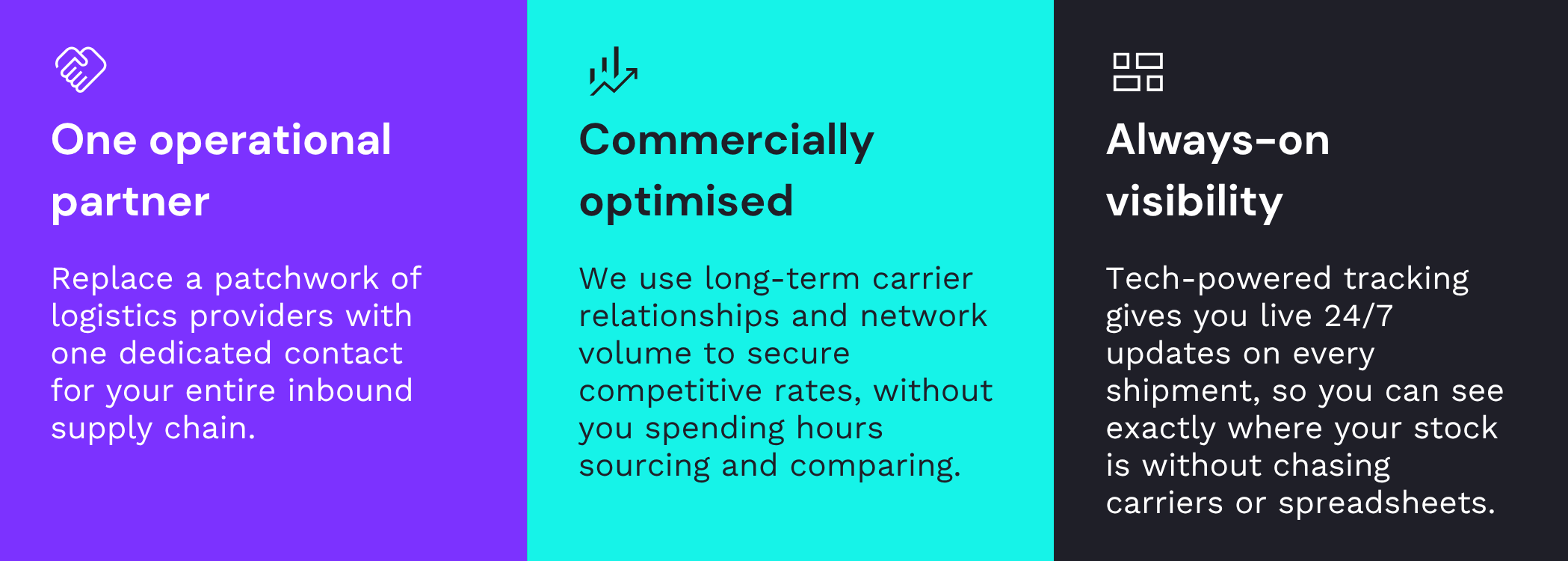
Planning now creates flexibility later
Peak season rewards preparation. Brands that review supplier performance, secure freight capacity, improve operational visibility and strengthen supply chain resilience now are often better positioned to respond when demand increases.
Our team is already working with ecommerce brands to review:
-
Peak season supply chain readiness
-
Supplier and production visibility
-
International freight planning
-
Inventory flow and warehouse readiness
-
End-to-end supply chain coordination
Because when every part of the supply chain works together, businesses are able to scale with greater confidence, reduce disruption and deliver the customer experience they've worked hard to build.
Book a discovery call with one of our supply chain and fulfilment specialists to explore how we can help strengthen your operations before peak season hits.
The new rules of cross-border commerce
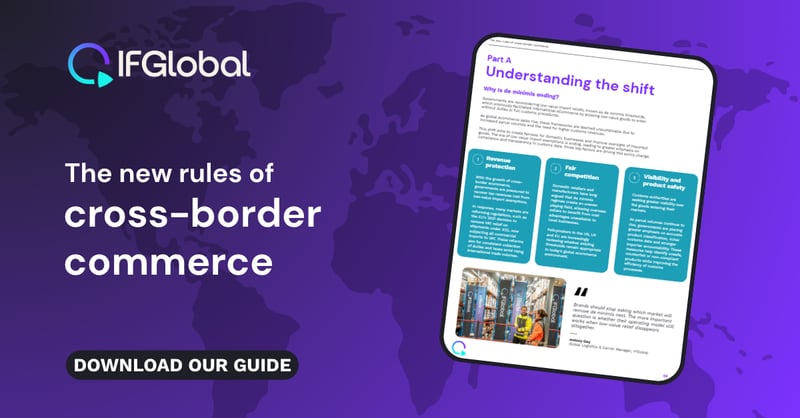
Over the last 12 months, the rules of cross-border commerce have started to change. For brands, this means international growth will depend less on low-value exemptions and more on operational excellence. The brands that prepare now will be better positioned to protect margins, reduce friction and continue scaling globally.
Not sure how exposed your current model is? Speak to our fulfilment experts to assess your cross-border readiness, or check out our handy guide.
The future of British beauty: Breakout Beauty 2026 launch

This month marked the official launch of the 2026 Breakout Beauty UK accelerator, bringing together 11 of the UK's most exciting emerging beauty brands as they begin a 10-week programme designed to help them scale and prepare for retail success.
As the exclusive fulfilment partner for Breakout Beauty UK, we’re proud to play a key role in supporting founders as they build the operational foundations needed for sustainable growth.
Throughout the programme, the IFGlobal team will deliver practical sessions covering fulfilment, technology, international expansion, retail and marketplace operations, and the strategies required to scale successfully. By sharing real-world experience, we aim to help founders become not only retail-ready, but operationally ready too.
We'd like to congratulate all 11 brands selected for this year's accelerator and look forward to supporting them throughout the programme.
🌟 Aegle's (Zoe Williams) 🌟 SHYNE (Alvin Mills) 🌟 dussl (Fraser Wilson) 🌟 MAYAH (Rebecca Heywood & Jessica Smith) 🌟 Keats (Lucinda Hart) 🌟 Stil Suncare (Tash Hagan) 🌟 BSSET (Ibrahim Abusamra & Mohammed Yaqub) 🌟 Skinbunny (Jon-Paul Lawrence) 🌟 Selkie Hair (Cicely Coops) 🌟 That Good Hair (Paris Reveira) 🌟 Skingredients (Jennifer Rock) 🌟

More from IFGlobal

How better inbound visibility reduces cost, delays and operational risk. Many fulfilment problems, like late stock, idle labour, delayed orders and unexpected transport costs, often begin long before inventory reaches the warehouse. In this article, we'll explore how better inbound supply chain visibility helps identify risks earlier, improve coordination across every stage, reduce delays, lower costs, and create more resilient logistics operations.
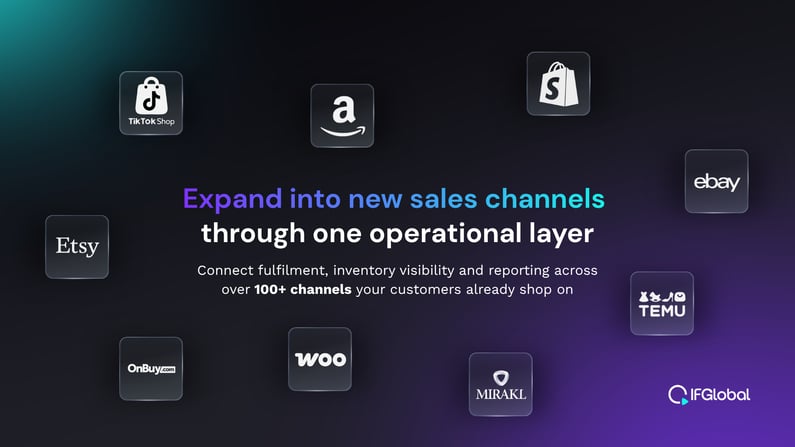
We've enhanced our fulfilment software with an expanded integrations suite. We've expanded the capabilities of our proprietary BladePRO fulfilment operating system with the launch of BladePRO Connect, a new multi-channel connectivity capability that marks the next stage in our plan to create a more connected operational infrastructure for ecommerce brands.
Learn more about BladePRO Connect.
.png?width=1200&height=627&name=Antony%20Day%20Spotlight%20(2).png)
IFGlobal in focus: Antony Day. In this edition, we speak with Antony Day, our Global Carrier and Logistics Manager, responsible for shaping and strengthening our global logistics network, ensuring our clients have access to the right carrier solutions, at the right cost, with the right service levels. From researching emerging carrier partners and supply chain innovations to building resilience against disruption, Antony plays a key role in helping our clients navigate an increasingly complex logistics landscape.
Read the spotlight Q&A.

Multi-channel fulfilment software: Everything growing ecommerce brands need to know. We know brands are hustling to scale across channels, and we see from our clients that the biggest bottleneck often isn’t marketing or product, but the fulfilment system that underpins it all. To sell everywhere is one thing; to fulfil everywhere in a consistent, profitable way is quite another. This is where advanced fulfilment software makes the difference. In this article we’ll walk you through how deploying advanced fulfilment software allows you to remove friction and scale faster.
Read the full article.