


GLOBAL BRANDS LOOKING FOR UNIFIED FULFILMENT



Classification might not sound exciting, but it shapes how industries are understood, measured, and ultimately operated.
With the UK’s Standard Industrial Classification (SIC) system undergoing its first major update since 1948, there’s a broader shift happening across ecommerce. Businesses are being defined more precisely, based on how they operate, rather than broad legacy categories like “retail” or “manufacturing”.
That might sound like a data or policy change. In reality, it has direct consequences for fulfilment, logistics, benchmarking, and how brands scale. Because once the system understands your business differently, everything built on top of it starts to change too.
In this article
-
The SIC update and how it came about (and why beauty is central to it)
-
Why classification is becoming an operational issue, not just an administrative one
-
What this means for ecommerce benchmarking and cost-to-serve
The SIC update and how it came about (and why beauty is central to it)
The UK’s Standard Industrial Classification (SIC) system is maintained by the Office for National Statistics (ONS) and is used across government, investment, and economic reporting to define and compare industries.
The latest update is part of a wider modernisation effort led by the ONS, aligned with international statistical frameworks. Its aim is to better reflect how today’s economy operates, particularly in fast-evolving, digital-first sectors.
The original SIC structure was built in 1948 around a manufacturing-led economy. Since then, it has increasingly struggled to capture the complexity of modern consumer industries.
Beauty and personal care is one of the clearest examples of this gap.
Historically grouped under broad retail or manufacturing categories, the sector has often been “flattened” in official data - despite having distinct operational characteristics such as high SKU complexity, fragile and regulated products, frequent launches, and experience-led fulfilment.
The update introduces more granular classifications that begin to reflect these realities more accurately. As a result, sectors like beauty are no longer just seen as retail categories; they’re increasingly recognised as operationally distinct ecosystems.
Why classification is becoming an operational issue, not just an administrative one
For years, ecommerce fulfilment has been built on generalisation. Standard workflows. Standard rate cards. Standard assumptions about demand, product behaviour, and customer expectations. That model worked when categories were loosely defined and differences were averaged out.
The SIC update is another signal that this era is ending.
Industries are being broken down more precisely. That means data becomes more accurate, but also more revealing. And when data improves, expectations shift across forecasting, logistics, finance, and operations.
In other words, fulfilment is becoming harder to run on assumptions.
How better data is changing fulfilment and forecasting
More precise SIC codes don’t just improve reporting. They improve how decisions are made, and this isn’t theoretical. It connects directly to how brands are operating right now. When categories are defined more accurately, demand signals become clearer:
-
Forecasting becomes more reliable
-
Seasonality patterns become easier to identify
-
Growth trends become more category-specific
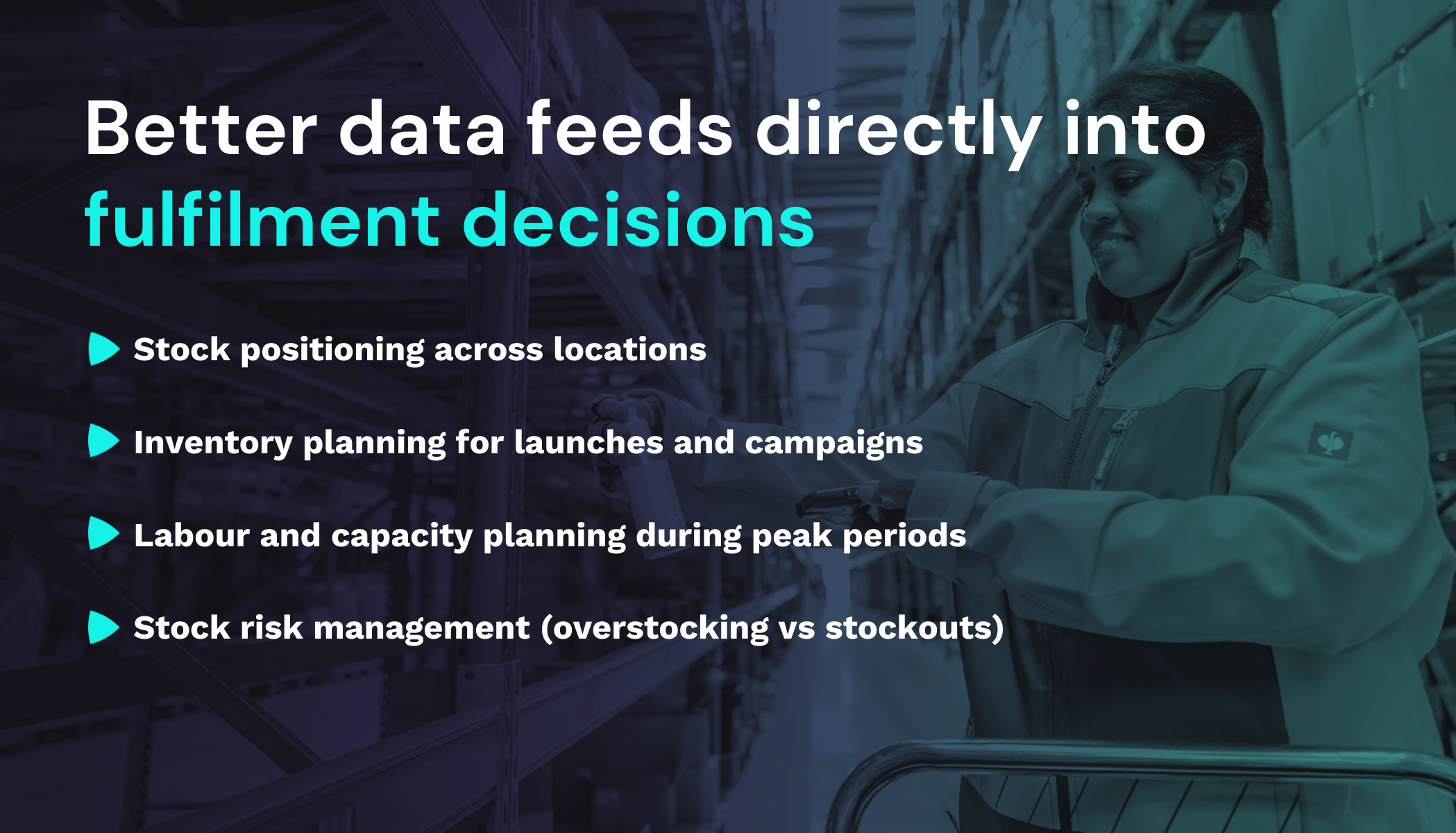
That creates both a challenge and an opportunity. The gap between “average performance” and “category reality” becomes far more visible. But the real impact is operational. Better data feeds directly into fulfilment decisions such as:
-
Stock positioning across locations
-
Inventory planning for launches and campaigns
-
Labour and capacity planning during peak periods
-
Stock risk management (overstocking vs stockouts)
In practice, this means operations teams can stop planning around blended ecommerce averages and start planning around how their category really behaves.
Why generic fulfilment models are starting to break
Ecommerce is not operationally uniform. Different sectors create fundamentally different fulfilment requirements.
-
Beauty and personal care - fragile packaging, compliance requirements, high SKU complexity, premium unboxing expectations
-
Apparel - high return rates, size variability, reverse logistics complexity
-
Supplements and wellness - batch tracking, expiry control, regulatory handling
-
Luxury and premium goods - low tolerance for error, high presentation standards
The issue is not that these differences exist. It’s that fulfilment has often treated them as exceptions rather than defaults. As classification improves, those differences become more visible in the data, and harder to ignore in operations design.
The result is a shift away from generic fulfilment models towards sector-aware operations that reflect how products behave in the real world.
What this means for ecommerce benchmarking and cost-to-serve
One of the most overlooked impacts of better classification is benchmarking.
Historically, many ecommerce brands have compared themselves against broad industry averages. The problem is that “ecommerce average” often hides more than it reveals. More granular classification changes that.
Brands can now:
-
Benchmark against true operational peers
-
Understand more realistic cost-to-serve expectations
-
Identify inefficiencies with greater accuracy
-
Make more informed decisions about fulfilment investment
This matters commercially, because small differences in fulfilment performance - pack accuracy, shipping speed, return handling - scale quickly as order volumes grow.
Better benchmarks lead to better operational decisions. But they also raise the bar for what good looks like.
.png?width=2098&height=1200&name=IFG-Infographic-Template%20(1).png)
How scaling brands should respond now
As classification improves, fulfilment becomes less about standardisation and more about alignment. Specifically, alignment between:
-
Product type and handling requirements
-
Demand patterns and inventory strategy
-
Brand positioning and customer experience
-
Operational design and category reality
This is where fulfilment partners become more than execution providers. They become operational design partners, helping brands build systems that reflect how they operate, not how generic models assume they do.
At IFGlobal, this is already how we approach operations and fulfilment.
We don’t build around a single operational template. We build around the realities of the categories we support; whether that’s beauty and cosmetics, health and wellness, apparel, or other high-growth ecommerce sectors.
The SIC update doesn’t change that direction, it only reinforces it.
The takeaway
The SIC update won’t change how you pick and pack orders tomorrow morning. But it does signal something more important. Ecommerce operations are moving into a more defined, more transparent, and more category-specific era.
Brands are already seeing this play out through:
-
More precise peak trading and demand planning
-
More refined investor and lender analysis
-
Increasing 3PL specialisation by category
-
Rising pressure on cost-to-serve accuracy
Put simply, the benchmarks brands have relied on are becoming more granular and more accurate. That changes how brands should think about:
-
Forecasting demand
-
Benchmarking performance
-
Structuring fulfilment partnerships
-
Scaling operational capacity
Because when your category is understood more precisely, there is less room for generic assumptions in how you run your business.
And in fulfilment, assumptions are often where inefficiency starts.