


GLOBAL BRANDS LOOKING FOR UNIFIED FULFILMENT



Edition 016 | November 2026
You're reading IF/Then by IFGlobal, the monthly newsletter for brands who don't compromise. For every what if, there's a then. If you're building your brand, then we're building with you. If you want scale, then you need strategy. If you're ready to grow, then this is where it starts.
IF returns feel like a cost of doing business, Then you could be missing a customer experience opportunity.
As ecommerce brands grow, customer experience usually gets built around the journey to checkout. Teams refine product pages, optimise delivery speeds and design unboxing moments to build trust and convert the sale.
Yet the customer experience doesn't end once an order has been delivered.
In fact, some of the most defining moments in a customer's relationship with your brand happen when things don't go entirely to plan. A product arrives but doesn't fit. A gift isn't quite right. Expectations don't quite match with reality. Suddenly, the customer's focus shifts from how well you market or sell to how helpful and reliable you are when they need support.
Returns are a customer experience moment, not just an operational process
For many brands, returns are still viewed primarily through an operational lens. They are measured in processing costs, carrier charges, warehouse labour and stock recovery rates. The objective is to process returns efficiently and minimise their impact on the business.
On paper, that makes perfect sense. But it also creates a blind spot. Customers experience returns as part of the overall relationship they have with your brand. To them it is far more than an operational process.
How that experience feels can have a lasting impact.
Research from the National Retail Federation shows that 71% of consumers are less likely to shop with a retailer again following a poor returns experience. Sometimes the true cost of a refund lies in the future revenue that disappears with the customer, rather than the refund itself.
The cost of a return is easy to measure. The value of trust isn't.
Returns generate obvious costs. Carrier charges must be paid, products inspected, and inventory may require cleaning, repackaging or reconditioning before it can be sold again. These costs appear clearly within operational reporting, making them easy to identify and manage.
The impact on customer trust is far less visible.
Unlike processing costs, trust doesn't appear on a dashboard. Customer confidence isn't measured through a warehouse KPI, yet its influence on long-term business performance can be substantial.
Consider two customers returning the same product. From an operational perspective, the returns may be almost identical. The same warehouse procedures take place. The same carrier is used. The same refund is processed.
However, the customer experience can be completely different.
One customer spends days chasing updates, wondering whether their parcel has arrived and when their refund will be approved. The other receives clear communication, realistic expectations and regular updates throughout the process. Both returns cost the business money, but only one leaves the customer feeling confident about placing another order in the future.
Why this matters more as businesses grow
As order volumes increase and customer acquisition costs continue to rise, retaining an existing customer becomes far more valuable than constantly replacing them. The risk during growth is tightening warehouse processes for speed and cost control without seeing how those changes feel on the customer's side. The brands that scale most successfully build operations that protect both margin and trust at the same time.
Where customer confidence is won or lost
Most customer journeys are designed around success. The correct product arrives, delivery meets expectations, and everything works as planned. While customers appreciate those experiences, they are now viewed as standard rather than exceptional.
Returns are different. They occur when something has fallen short of expectations, which naturally creates uncertainty. Often, the return itself is not the source of frustration. The uncertainty surrounding it is.
Remove uncertainty with clear, proactive updates
Customers want reassurance that their issue will be resolved quickly, fairly and with minimal effort from their side. Specifically, customers want to know:
- Has their return been received?
- Has it been inspected?
- When will their refund arrive?
- Has their exchange been approved?
When these questions remain unanswered, customer confidence drops and support enquiries increase. Clear communication, proactive updates and realistic timeframes improve the experience significantly without requiring businesses to absorb additional cost. They simply remove doubt from the process.
Protect relationships by making exchanges effortless
One of the most common assumptions in returns management is that a return represents a lost sale. Many customers just need a different size, colour or variation.
Research from IMRG and nShift found that 66.1% of UK shoppers would likely accept an exchange offered at the point of return instead of a refund. Making exchanges straightforward helps customers achieve the outcome they originally wanted, leaving a far stronger impression than just issuing a fast refund.
Use return insights to prevent issues upstream
Sales data tells you what customers decided to buy. Return reasons reveal where reality fell short of what they expected.
Patterns in return data highlight:
- Product descriptions or imagery that set the wrong expectations
- Sizing inconsistencies across specific lines or ranges
- Recurring manufacturing or quality concerns
- Packaging or transit weaknesses causing avoidable damage
When those insights remain locked inside warehouse reporting, nothing changes. When merchandising, ecommerce, product and operations teams all see why items are coming back, avoidable returns can be reduced much earlier in the customer journey.
Customer experience depends on operational visibility
Delivering that level of visibility consistently becomes more difficult as order volumes grow. Without connected systems, customer service, operations and commercial teams often work from different versions of the truth.
At IFGlobal, our BladePRO | The Fulfilment Operating System, brings orders, inventory, warehouse operations, shipping, returns and reporting together in one real-time view. It links your branded self-service returns portal, carrier tracking, warehouse inspection workflows and live inventory reporting.
From the moment a customer registers a return or selects an exchange, every team has clarity:
- Customer service can give instant, accurate answers without chasing the warehouse
- Operations can prioritise incoming returns and balance peak warehouse workloads
- Merchandising can spot SKU-level sizing or quality trends early
- Finance and Commercial can track real-time stock recovery and margin protection
Combined with our dedicated returns management and rework and conditioning services, brands can move returned items back into live sellable inventory quickly and accurately while keeping customers informed at every step.
"Most brands plan every detail of outbound peak, then treat January returns as an afterthought. When operations, tech and customer service share live visibility of what is coming back and when it is ready to restock, a busy returns period stops being a bottleneck and becomes a genuine retention tool." - Paul Lavin, Operations and Transformation Director, IFGlobal.
Turn returns into lasting customer confidence
Returns will always introduce additional handling, increase costs and place pressure on inventory and customer service teams. But they also give you a clear opportunity to reinforce trust, demonstrate reliability and show customers that the experience they were promised before checkout continues long after delivery.
Over the coming weeks, we're helping growing ecommerce brands:
- Simplify returns and exchanges through self-service workflows
- Improve visibility across incoming returns, inspections and inventory recovery
- Track return reasons and trends to identify opportunities for improvement
- Recover value from returned stock faster
- Create smoother post-purchase experiences that protect customer loyalty and margins
When every part of your operation works together, a return becomes more than a process to manage. It becomes an opportunity to protect customer confidence, strengthen loyalty and encourage future purchases.
Book a discovery call with one of our fulfilment experts to see how connected returns management can elevate your customer experience this peak and beyond.
Taking a spin at the Retail Supply Chain & Logistics Expo
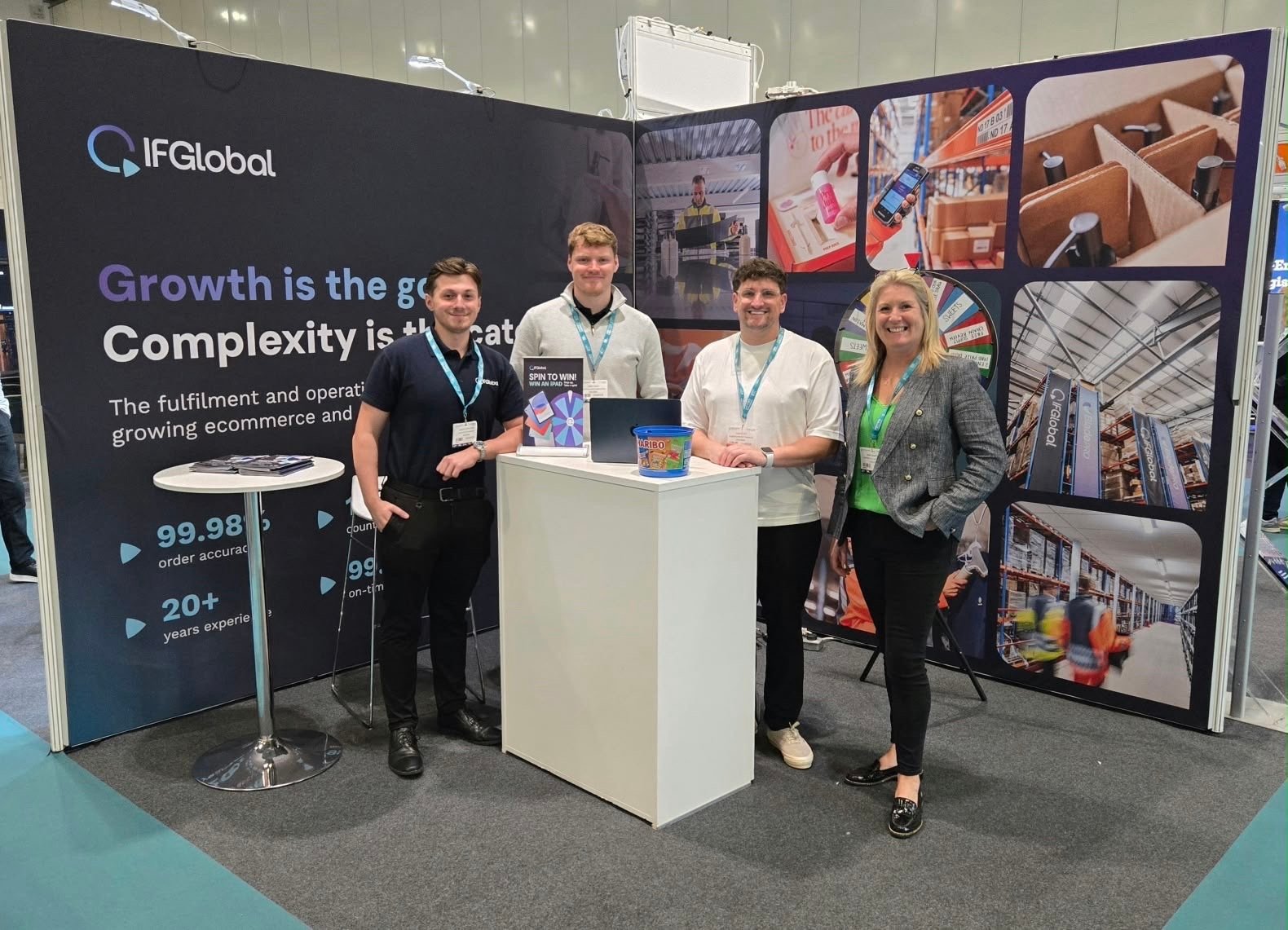
Earlier this month, Jane Derbyshire, Finn Scott, Jonathan Davis and Patryk Czepulonis headed to London for the Retail Supply Chain & Logistics Expo, and what a brilliant two days it was! The team had a fantastic time connecting with ambitious ecommerce brands and supply chain leaders to talk all things scaling fulfilment, expanding into new markets, and building operations ready for the next stage of growth.
Our stand was full of energy and great conversations from start to finish. Alongside chatting through operational challenges and future plans, visitors also got the chance to test their luck on our spin-to-win wheel for the opportunity to win an iPad.
A huge thank you to everyone who stopped by to say hello, share what you are working on, and take a spin. It was wonderful meeting so many passionate teams, and we are already looking forward to continuing those conversations.
More from IFGlobal

Your 3PL contract is ending. Here's what to audit before you give notice. When your 3PL contract comes up for renewal, it is easy to just check the unit rates and sign again. This article walks through the real areas you need to audit before making a decision, from hidden surcharges and the daily workload on your team to peak performance and notice periods. Knowing what your operation actually costs and where the friction lies puts you in control before the renewal clock runs out.
Read the full article to learn more.
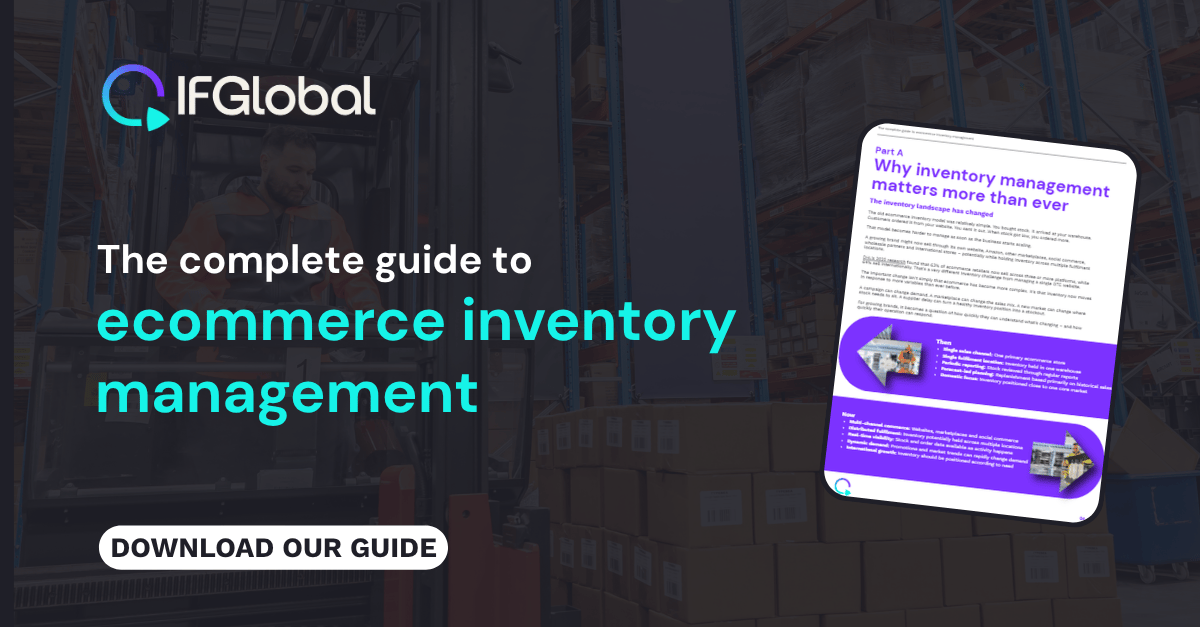
Why inventory management becomes a growth problem as ecommerce brands scale. As your brand expands across new sales channels and international markets, simply holding more stock rarely solves stockouts or tied-up cash. Inventory challenges are usually visibility and placement problems at their core, requiring real-time answers on what is genuinely available to sell and where it sits. Getting the right stock in the right place turns inventory from an operational bottleneck into a driver for growth.
Download our guide to find out more.

Why subscription fulfilment breaks at the point your retention gets good. Strong customer retention should make your business more predictable, yet every renewal creates another recurring order that quietly adds operational strain. Behind the scenes, rising subscriber numbers can stretch inventory forecasting, warehouse capacity, and manual workarounds long before service levels visibly slip. Spotting these early signs of pressure ensures your fulfilment setup can scale smoothly alongside your growing subscriber base.