


GLOBAL BRANDS LOOKING FOR UNIFIED FULFILMENT



Growth is supposed to feel exciting. A new marketplace launch. Stronger sales. New customers discovering your brand. More opportunities to grow. But for many ecommerce brands, the reality looks a little different behind the scenes.
While the commercial side of expansion can move quickly, operations often gets left playing catch-up.
A new sales channel goes live and orders start flowing. Then come the questions.
-
How is inventory being allocated?
-
Can fulfilment keep pace?
-
Which stock levels are accurate?
-
Why doesn't reporting match across systems?
What looked like a straightforward channel launch suddenly creates a growing list of operational tasks, workarounds and manual checks.
Not because anything is broken, but because most operational models were never designed to support an expanding network of marketplaces, social commerce channels and retail integrations all at once.
That's where growth starts to feel more complicated than it should.
The operational cost of channel expansion
Every new channel brings opportunity, but it also brings another set of operational requirements.
One marketplace quickly becomes several. Orders are flowing from different sources. Reporting sits across multiple platforms. Inventory needs to stay synchronised. Customer expectations remain the same regardless of where the order originated.
Teams start building workarounds just to keep things moving. And at first, it feels manageable. A spreadsheet here. A manual stock update there. But over time, every additional channel introduces another layer of operational complexity. The result isn't so much operational failure as it is operational friction. That’s what slows decision-making, creates blind spots, and makes growth harder to sustain.
Why demand is outpacing operational infrastructure
The speed of modern commerce has changed dramatically. Channels like TikTok Shop have compressed the time between discovering an opportunity and needing to operationalise it. Marketplaces such as Amazon, Etsy and Mirakl-powered retail networks continue to create new routes to market for ambitious brands.
For growth-focused brands, the opportunity is clear. The challenge is what happens next.
Every channel typically brings its own workflows, reporting structures, inventory requirements, order management processes, and fulfilment considerations. The more channels a business adds, the more disconnected its operational ecosystem can become. Suddenly teams find themselves managing:
-
Inventory across multiple systems
-
Different reporting environments
-
Separate order flows
-
Manual stock synchronisation
-
Marketplace-specific operational processes
-
Increasing fulfilment coordination
The more successful channel expansion becomes, the harder it can be to maintain operational clarity.
We've seen brands reach a point where adding another sales channel isn't a commercial decision anymore. It's an operational one.
Before you ask whether a channel can generate demand, you need confidence that your operation can support it.
When visibility starts disappearing
One of the most common assumptions in ecommerce is that operational complexity is simply the cost of growth. But much of that complexity doesn't come from volume; it comes from fragmentation.
Disconnected systems create disconnected decision-making. When inventory data sits in one place, fulfilment data in another, and channel reporting somewhere else entirely, teams lose the ability to operate with confidence.
Simple questions suddenly require multiple systems and multiple conversations to answer.
-
How much stock is genuinely available?
-
Which channels are performing best?
-
Where are fulfilment pressures starting to emerge?
-
Can our operational model support another sales channel?
The answers usually exist somewhere. The problem is they're rarely visible in one place. And as channel complexity grows, so does the effort required to keep everything aligned. That's why so many operations teams feel like they're working harder than ever, even when growth is performing exactly as planned.
Commerce operations need a central connection point
As ecommerce ecosystems become more complex, many brands are discovering they don't necessarily need more systems, but better connections between the systems they already have.
The most scalable operational models are built around a central operational layer that allows channels, fulfilment, inventory, and reporting to work together more effectively. Instead of creating separate operational processes for every new marketplace, brands can establish a connected foundation that supports expansion without multiplying complexity.
Creating operational infrastructure for multi-channel growth
This shift is why we're seeing growing demand for what can best be described as a connectivity layer: a unified operational layer that extends fulfilment and operational visibility across multiple sales environments.
Rather than treating every channel as a separate operational challenge, a connectivity layer creates a more connected ecosystem where information can flow more effectively between sales channels, inventory management, fulfilment operations, and reporting.
This is exactly the challenge we've been focused on solving at IFGlobal.
Launching this July, our enhanced connectivity layer, BladePRO Connect, extends fulfilment and operational visibility across a growing ecosystem of sales channels and commerce platforms.
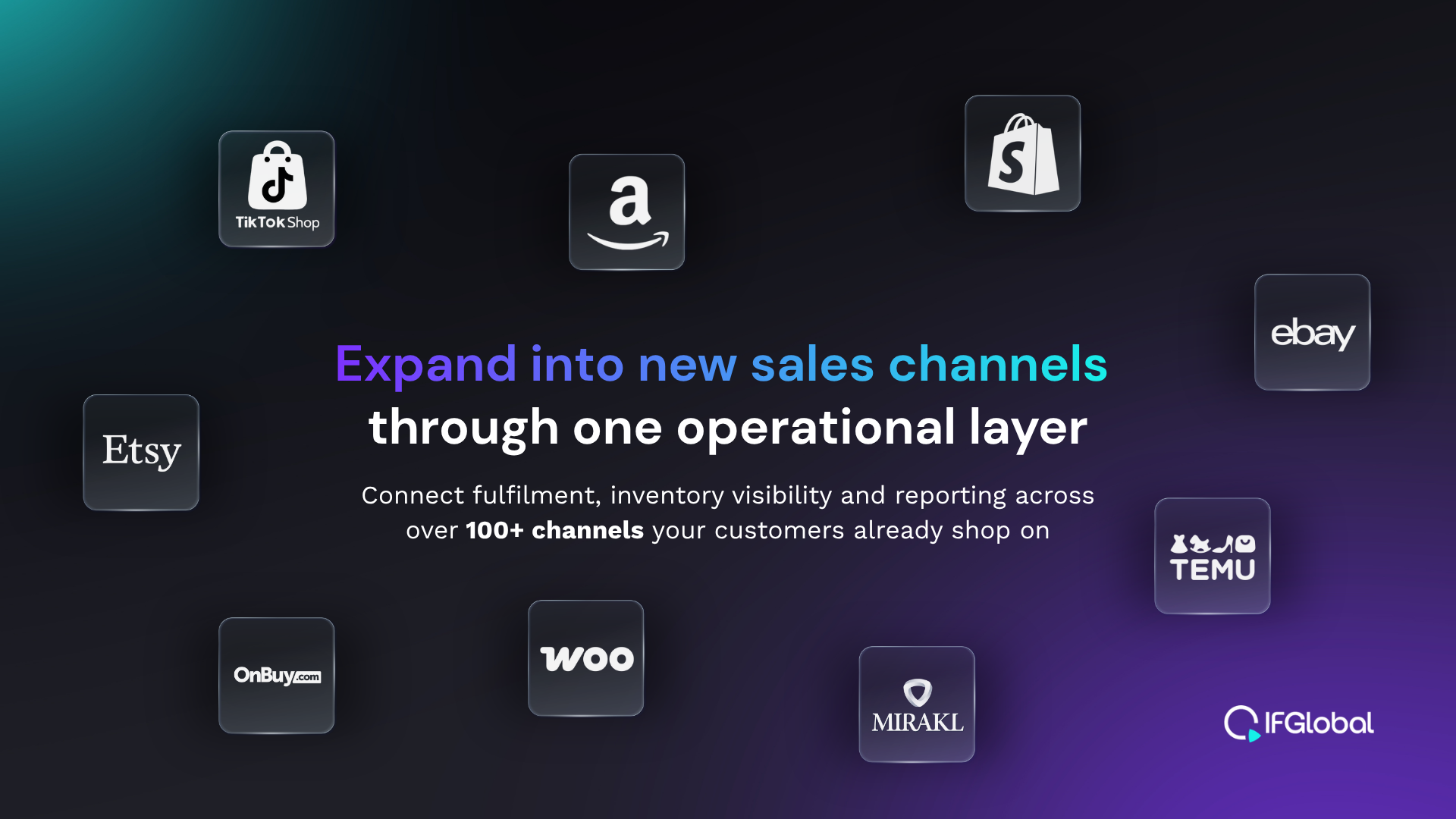
TikTok Shop. Etsy. Amazon. Shopify. Mirakl-powered marketplaces. Sage virtual stock environments and more than 100 supported integrations. All connected through a single operational layer designed to reduce fragmentation between sales channels, inventory management, fulfilment and reporting.
Our goal is to help brands expand into new channels without creating unnecessary operational complexity behind the scenes.
Because launching a new channel should feel like growth, not another operational project.
“Brands shouldn’t have to choose between expanding their sales channels and maintaining operational control. BladePRO Connect will remove the fragmentation behind modern commerce and make multi-channel growth far easier to scale.” – Finn Scott, Product Manager, IFGlobal.
The future of commerce is operational scalability
Modern commerce isn't about being everywhere. It's about being able to operate effectively everywhere you choose to be.
The brands that scale successfully over the next few years won't necessarily be the ones with the most channels, but the ones with the strongest operational infrastructure supporting those channels.
Because every new marketplace, retail partnership, social commerce channel, or ecommerce platform introduces opportunity. However, opportunity only becomes sustainable growth when operations can support it.
That's why the next competitive advantage in ecommerce is operational readiness; the ability to expand into new channels without introducing new layers of complexity, maintain visibility as volume increases, and create a connected operational ecosystem that scales alongside the business.
Growth isn't slowing down. The question is whether the operational model underneath it is built to keep pace.